When Teammates Collide
The Top Ten Intra-Team Clashes in F1 History

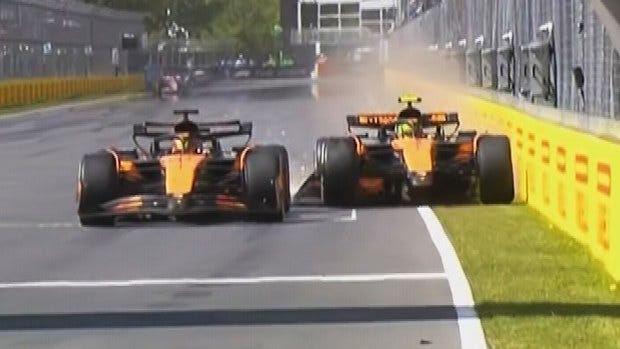
It was only a matter of time.
After a string of wheel-to-wheel battles, close calls and tense moments, McLaren’s title challenging duo of Oscar Piastri and Lando Norris finally tipped over the edge. In what had been building for weeks, the pair came to blows, quite literally, on track, in a moment that felt as inevitable as it was explosive. For all the mutual respect and team-first talking points that have surrounded McLaren in the past 6-9 months, this clash marked a turning point. No longer purely just friendly rivals, Piastri and Norris have now drawn a line in the tarmac, and with the championship hanging in the balance things could get even more competitive as the summer stretch rolls in.
If there’s one golden rule, it’s this: Don’t mess with your teammate. But history goes to show that this rule gets broken more than team principals would care to admit. From title decider collisions, to grudge matches that festered for years, intra-team clashes that have provided some of the most controversial and unforgettable moments in F1 history. They’ve re-written narratives, torn apart garage dynamics and fueled a kind of chaos that even Netflix’s Drive to Survive couldn’t script.
So buckle your seatbelts folks, Here are the Top 10 teammate collisions that shook the paddock like few moments ever could.
#10: Italian Grand Prix 1993 - Christian Fittipaldi & Pierluigi Martini (Minardi)
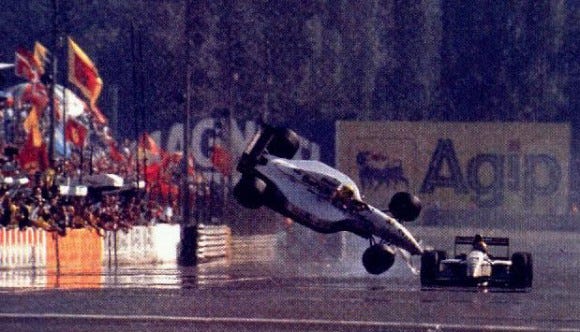
Not all teammate clashes come from the front of the grid. Sometimes, it’s the backmarkers who deliver the most unforgettable fireworks. In Monza 1993, where Minardi, one of the most beloved F1 underdogs, delivered one of the most spectacular and bizarre finishes in Grand Prix history. Minardi often were heralded for punching above their weight despite having a shoestring budget. Their cars were cleverly designed, their ethos respectable and their lineup in ‘93 was pure cult hero material. Christian Fittipaldi, the nephew of two-time world champion Emerson Fittipaldi, and Pierluigi Martini, the Italian nicknamed Mr. Minardi for his years of loyalty and gritty service to the team. During the Italian Grand Prix, the two were running a lonely but spirited race, dicing for minor points. Martini was nursing a gearbox issue but still was keeping Fittipaldi behind him. As the pair blasted through Parabolica on the final lap. Martini led and Fittipaldi tucked up behind, looking to beat him to the line. And then, it happened. Fittipaldi’s front wing clipped Martini’s rear tire, launching the Minardi into the air. At nearly 200mph, the car flipped backwards, threatening a horrifying mid-air accident in the pre-halo era, but somehow miraculously it completed a full somersault, crashing down hard on all four wheels just as it crossed the finish line. Martini landed 7th, Fittipaldi 8th and the audience sat stunned. It was just about as terrifying as it was awe-inspiring. One would think decades later that the tension would’ve cooled. But when interviewed in 2015, Fittipaldi had zero regrets and even less chill, still calling Martini a fool, an imbecile, and an idiot. Minardi investigated the incident at the time and found that Martini had done nothing wrong, his car simply skipped 5th gear due to the ongoing mechanical issue, slowing him just enough to cause the contact. Ironically, it was Fittipaldi who got the axe for the following race, as Martini had generally outpaced him over the course of the season.
In the end, the clash was a microcosm of Minardi’s rollercoaster existence. The team would merge with Scuderia Italia after 1993, limp through another decade on willpower alone, and eventually sell to Red Bull in 2005, becoming Toro Rosso, making it a spiritual ancestor to today’s Racing Bulls in 2025. Fittipaldi vs. Martini may not have altered a championship, but it delivered an incident so insane it still defies belief, and goes to show even F1’s minnows have their place in F1’s explosive history.
#9: Singapore Grand Prix 2018 - Sergio Perez & Esteban Ocon (Force India)
What happens when your drivers fight so often you’re forced to put them on a leash? Ask Force India in 2018. They weren’t competing for wins but as a midfield team every point mattered. And with Sergio Perez, the seasoned, aggressive Mexican, alongside Esteban Ocon, the ambitious French up-and-comer, Force India had one of the stronger pairings in the pack. They also had one of the more volatile.There had already been multiple clashes in 2017, and the tension showed no signs of cooling, but it all boiled over at Singapore 2018. Fresh off a double points finish in Monza, the team entered Singapore on a high. That didn’t last long, 3 corners into the Grand Prix Ocon and Pérez tangled. Ocon tried to sneak around the outside into Turn 3, but Pérez squeezed him into the wall, Ocon was out of the race. Pérez claimed post-race he hadn’t seen the other car. But eventually, under pressure, he took blame for the incident, though his apology felt disingenuous as he repeated the exact same scripted apology in multiple interviews the following week, almost more like a PR-approved message than genuine remorse. Fans and pundits both questioned how Perez got off so lightly, but Force India didn’t care. From that race forward, team orders were imposed. Strict restrictions on intra-team fighting were introduced, effectively banning their drivers from racing each other at all.
To make matters worse, Ocon’s seat was already under threat, The Stroll family had bought into the team, and it was only a matter of time before Lance Stroll would take Ocon’s place. That’s exactly what happened. For 2019, Ocon found himself without a race seat, relegated to reserve driver duty at Mercedes, a painful setback for a talent like his. Since then, Ocon has built a reputation as one of the most difficult teammates in the sport. He’s now collided with six different teammates, including multiple run-ins with Fernando Alonso and Pierre Gasly during his stint at Alpine. By 2024, Alpine finally had enough, and Ocon made the move to Haas. His only peaceful teammate stint? Daniel Ricciardo, in 2020, when Ricciardo was clearly the faster driver of the two of them. The exception that proves the rule.
#8: Austrian Grand Prix 1999 - Mika Hakkinen & David Coulthard (McLaren)
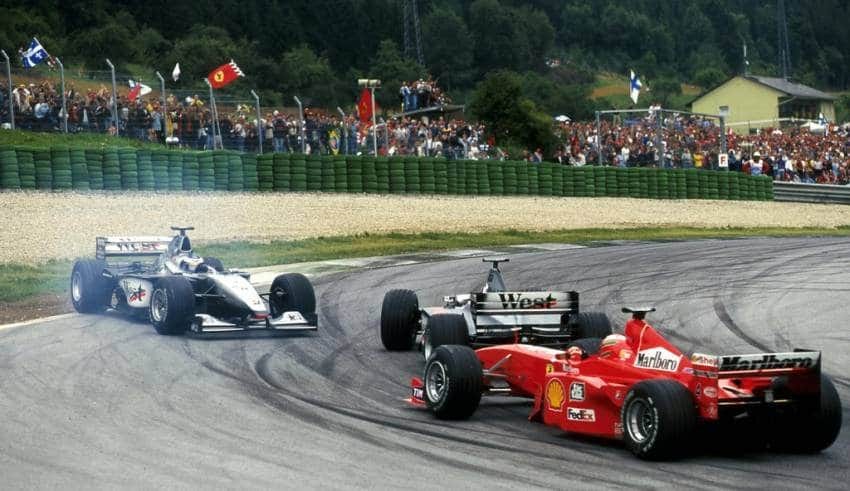
In Formula One, titles are won with speed and consistency, and lost just the same through silly mistakes. In 1999, McLaren nearly handed one away. It was shaping up to be one of the more competitive titles of the decade, The reigning World Champion, Mika Häkkinen, was locked in a fierce battle with Ferrari’s Michael Schumacher and Eddie Irvine. But everything changed at Silverstone, Round 8 of the season, when Schumacher suffered a terrifying 200mph crash that broke his leg and sidelined him for much of the year. With Ferrari wounded, it was McLaren’s title to lose. Then came Austria. At the A1-Ring, McLaren were flying. Häkkinen and his teammate David Coulthard locked out the front row and were lapping nearly a full second faster than Irvine’s Ferrari in race trim. On paper it looked like a routine 1-2 finish until disaster struck only 30 seconds into the race. Heading into the tight uphill Turn 3, Coulthard went for a bold, perhaps reckless, move on Häkkinen. The Finn turned in, unaware of the lunge, and the two collided. Häkkinen was sent spinning into the gravel trap, narrowly avoiding a DNF as he kept the engine alive and rejoined dead last. Häkkinen mounted a sensational recovery, clawing his way back through the field to finish on the podium in third place, salvaging what he could from the wreckage. Coulthard, meanwhile, failed to hold off Irvine in the closing stages, gifting Ferrari a win they had no business claiming.
After the race, Coulthard publicly apologized to Häkkinen. McLaren boss Ron Dennis, no stranger to inter-team fireworks, opted for diplomacy over discipline. Instead of piling on the blame to Coulthard, he worked quickly to quell the fire and restore unity, perhaps learning from the past with Senna & Prost. The mature response paid off and Häkkinen stayed focused, ultimately securing his second consecutive World Championship. Coulthard remained with McLaren through 2004, proving himself as a reliable, if sometimes frustrating, lieutenant. Austria stands as a reminder that in F1, the enemy isn’t always the car behind you, sometimes the battle comes within.
#7: Brazilian Grand Prix 2019 - Sebastian Vettel & Charles Leclerc (Ferrari)
Many of F1’s most memorable teammate rivalries arise when a rising force threatens the established order and few symbols of change have been more dramatic than Charles Leclerc’s arrival at Ferrari in 2019. He wasn’t just another young talent, he was the Ferrari chosen one and signed to the longest contract in Ferrari history, viewed as the heir apparent to lead the Scuderia back to glory. His promotion came with a massive asterisk though, he was replacing Kimi Räikkönen and stepping into a garage already occupied by Sebastian Vettel, a four-time World Champion, and up to this point, the #1 at Ferrari. The dynamic was tense from the start, Leclerc being quick, confident and unafraid to push boundaries. Early signs in Bahrain and Monza signalled that something was coming, and by the time the circus rolled around to Sao Paulo for the Brazilian Grand Prix, the truce had all but dissolved. On Lap 66, Leclerc had just overtaken Vettel for 4th into Turn 1, but Vettel wasn’t done. He came back with DRS and tried to re-pass on the straight heading into Turn 4. But as he pulled alongside, the pair knocked wheels and it didn’t look like much but the result was disastrous. Leclerc’s suspension broke, and Vettel picked up a puncture. Seconds later, both Ferraris were limping to the side of the track with terminal damage. Race over and the first time in 6 years that no Mercedes and no Ferraris were on the podium.
\Team Principal Mattia Binotto refused to assign blame, and neither driver received a formal penalty but the internal harmony at Ferrari had fractured, and the era of Vettel as team leader was all but over. Leclerc would go on to outscore Vettel in both 2019 and 2020 with qualifying pace was often outshone the veteran. By the end of 2020, Ferrari announced that Vettel would be leaving, making way for Carlos Sainz as Leclerc’s new teammate. Looking back, Vettel harbors no bitterness, speaking fondly of his time at Ferrari acknowledging the heartbreak of not winning a title but still becoming the third most successful Ferrari driver in history in terms of wins. As for Leclerc, he remains Ferrari’s long-term bet, still chasing the dream, carrying the weight of the red and everything it represents. Perhaps this was a passing of the torch, marked not by ceremony but by force.
#6: United States Grand Prix 2002 - Ralf Schumacher & Juan Pablo Montoya (Williams)
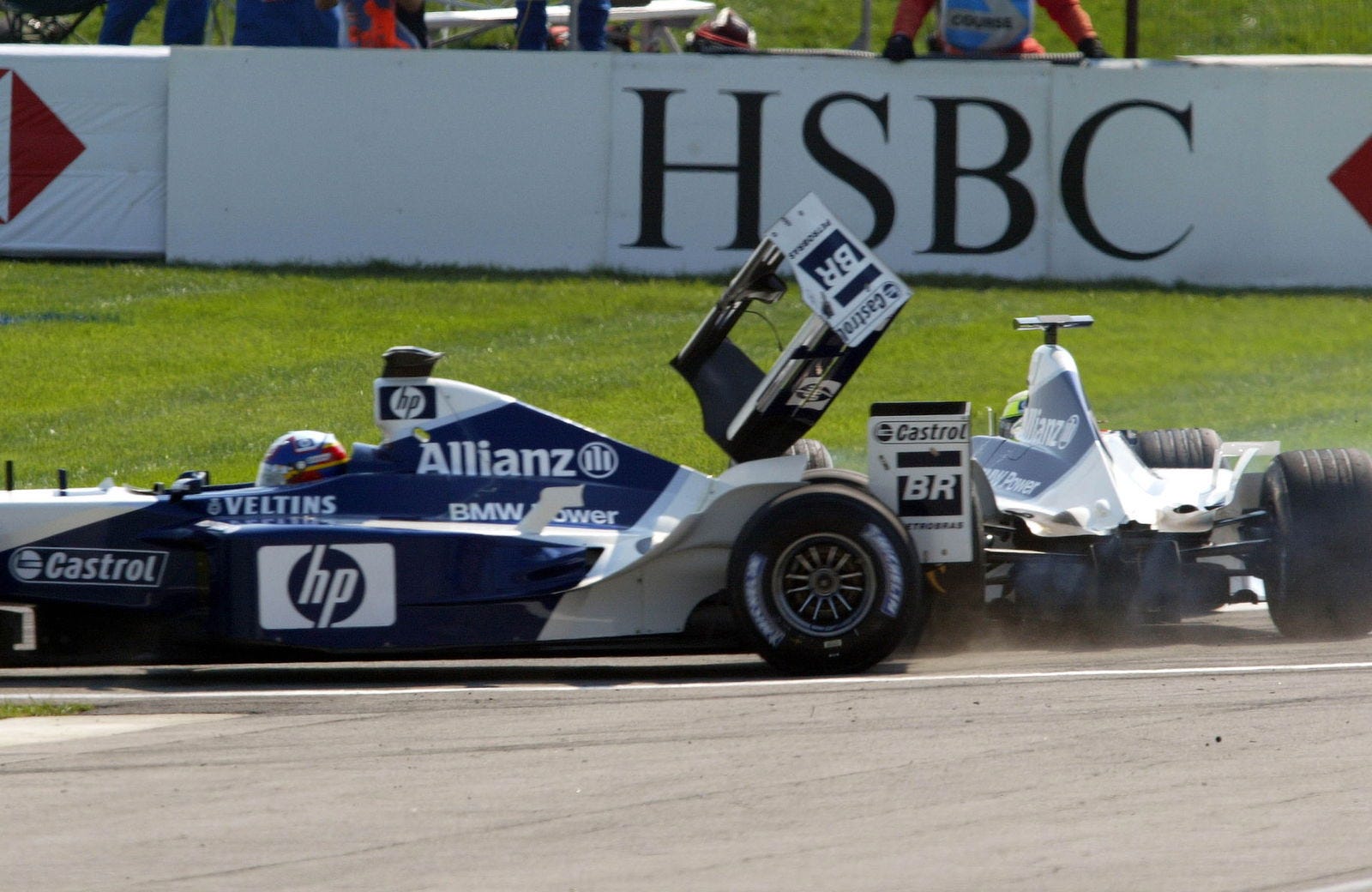
The early 2000’s Williams team was a powder keg waiting to blow, and at the heart of it was the duo of Ralf Schumacher and Juan Pablo Montoya. Montoya, a big talent from Colombia, fresh off a CART (Indycar) championship and Indianapolis 500 victory, and Ralf Schumacher was the often-overlooked younger brother of Michael Schumacher, a driver with speed and pedigree. From the moment they were paired, it seemed like the relationship was strained, they didn’t care to get along and the tension was thick. The defining clash came at the United States Grand Prix, Indianapolis, 2002. Very early in the race, the two found themselves locked in a battle for fifth. As they exited Turn 13, just ahead of the famous banking, they charged down the main straight side by side. Montoya swept to the outside, aiming to pass into Turn 1, but Ralf lost the rear, spinning into Montoya’s right-rear tire. Both Williams cars skidded off into the grass in a dramatic crash. Montoya was able to recover and finish fourth. Ralf trailed home in dead last. Williams technical director Patrick Head didn’t point fingers, but he was scathing in his assessment, calling out both drivers for their egos. Montoya was blunt post-race, saying Ralf had made an error and forced him off but Schumacher countered saying that there simply wasn’t enough space for Montoya to pull the move off cleanly.
Over their 4 seasons together, Montoya outperformed Schumacher in three of them. He would later claim that he broke Ralf mentally, asserting that the intra-team battle left a toll on the Germans psyche. Watching their on-track behavior, it’s not hard to believe. Though neither driver would claim a World Championship, both carved out respectable legacies. Ralf as a multiple Grand Prix winner, and Montoya as one of the rare drivers to win in IndyCar, Formula One, and NASCAR.
#5: Azerbaijan Grand Prix 2018 - Daniel Ricciardo and Max Verstappen (Red Bull)
For a brief moment, Daniel Ricciardo and Max Verstappen had one of the most cordial, and dare I say fun, teammate relationships in Formula 1. Ricciardo, he ever-smiling Aussie fan favorite, was Red Bull’s established star, while Verstappen the teenage phenom with otherworldly talent was being heralded as the sports next great champion. They joked, they got along, and they delivered thrilling wheel-to-wheel action without ever crossing the line. Up until that line was crossed in Baku at the Azerbaijan Grand Prix in 2018. At Azerbaijan, the two were locked in a tense race-long battle for fourth place with Verstappen jumping ahead of Ricciardo in the pits. On Lap 40, Ricciardo lined up a signature divebomb down the long front straight, aiming to retake the position into Turn 1. But it was catastrophic as Ricciardo committed to the move, Verstappen made a last-second defensive swerve, leaving his teammate with nowhere to go. Ricciardo slammed into the back of the Dutchman at high speed, both cars flew off into the runoff area and out of the race, leaving Red Bull stunned.
Team Principal Christian Horner publicly blamed both drivers and confirmed they had been summoned to the Red Bull factory to apologize to the entire team. But behind closed doors, the damage was done emotionally. Ricciardo later admitted that this was the turning point in his Red Bull tenure, and he felt that Verstappen was shielded from blame, that the team dynamic had shifted, and that his place in the pecking order was no longer secure. By the end of the season, Ricciardo made the shock announcement he was leaving Red Bull to go to Renault, a move that didn’t land him back at the top. Two solid years there and then a move to McLaren led to a rocky stint, and by now, Ricciardo’s F1 career is essentially over. Meanwhile, Verstappen flourished. Red Bull fully embraced Verstappen as their #1 driver, and he repaid that faith with four consecutive titles from 2021 to 2024, delivering a new era of dominance in the Red Bull.
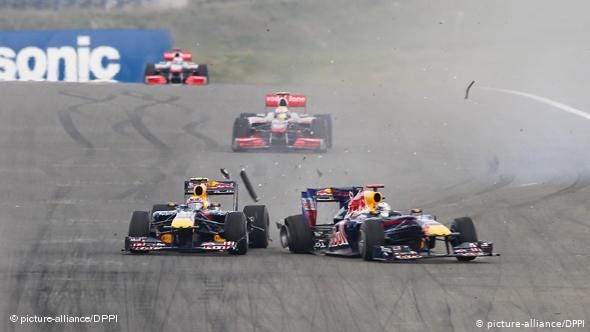
#4: Turkish Grand Prix 2010 - Mark Webber & Sebastian Vettel (Red Bull)
Teammates for 94 races, Sebastian Vettel and Mark Webber formed one of the most combustible duos in recent memory. Sebastian Vettel, was fast, relentless and young but Mark Webber was o slouch himself. He wasn’t quite on Vettel’s level over a full season, but on his day, he could beat anyone, including his teammate. One of those days came at Istanbul Park in 2010 for the Turkish Grand Prix, where Webber had snatched pole and was leading the race in a commanding 1-2 for Red Bull, with Vettel following closely behind. As the laps wound down however, Vettel made a move on Webber for the lead down the back straight. He pulled alongside Webber, but in a flash, they collided. Vettel clipped Webber’s front wing, sending himself spinning out of the race. Webber managed to continue, limping home in third, absolutely furious.
The aftermath fully lit the fuse, with Red Bull senior advisor Helmut Marko quickly blaming Webber, fueling the narrative that the team had a clear favorite. Outside observers and much of the F1 paddock could see that the blame laid squarely on Vettel for cutting in too soon. But the incident exposed a growing divide between the team, and from that point on, the power dynamic was clear. Red Bull was Vettel’s team. Later that year, Vettel was given Webber’s upgraded front wing during the British Grand Prix weekend, sparking even more outrage from the Australian. Despite all of this, Webber kept fighting, but it wasn’t but Vettel ultimately clinched the 2010 World Championship, his first of four consecutive titles from 2010-2013. By 2013, the relationship was unsalvageable. The famous “Mutl-21” incident at the Malaysian Grand Prix, where Vettel blatantly disobeyed team orders and overtook Webber was the final straw. Webber was done with the politics and announced his retirement at season’s end. So Turkey was not just a race clash, it drew battle lines between Vettel and Webber, setting the tone for years of silent tension and betrayal.
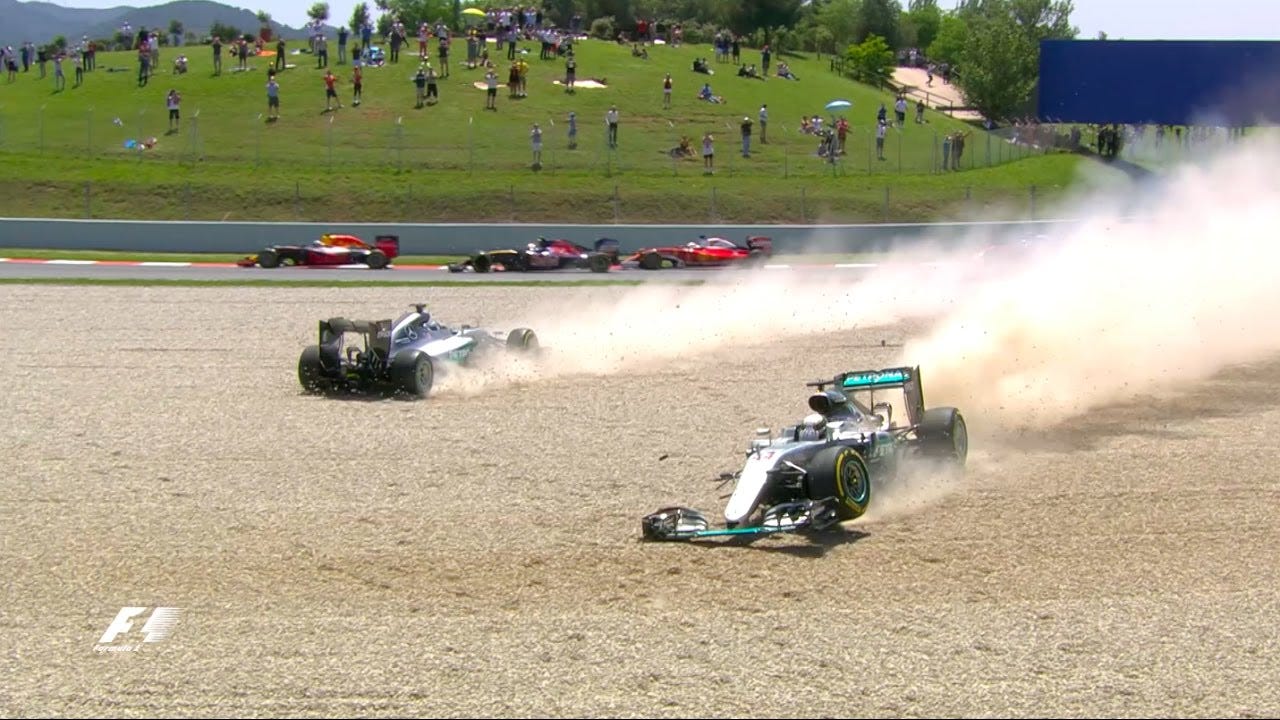
#3: Spanish Grand Prix 2016 - Lewis Hamilton & Nico Rosberg (Mercedes)
Lewis Hamilton’s career has been defined not only by his dominance, but by the friction that came along with it, particularly from those desperate to beat him in equal machinery. But 2016 was different. This time it wasn’t just another challenger, it was Nico Rosberg, Hamilton’s teammate at Mercedes, and a driver with enough talent to take the fight all the way. By 2016, Hamilton had already validated his high stakes move to Mercedes with two titles in 2014 and 2015, but Rosberg was not as kind to playing second fiddle. The two had a long history, having met as kids in karting where they were once close friends, ultra competitive even then, but bonded over a dream of reaching Formula One. Their backgrounds couldn’t have been more different, Hamilton from a modest upbringing on a council estate in England, with a father juggling multiple jobs to keep his racing hopes alive while Rosberg raised in Monaco, the son of 1982 World Champion Keke Rosberg. But on track they were equals, and the flashpoint came in 2016 at the Spanish Grand Prix in Barcelona.
Hamilton started on pole with a 43-point lead in the title race. But Rosberg got the jump at the start and snatched the lead going into Turn 1. Desperate to reclaim the position, Hamilton made a lunge down the inside heading into Turn 3, Rosberg moved across to defend and Hamilton’s front wing clipped the grass. The car spun out of control, and slammed into Rosberg’s Mercedes. Both were out. On Lap 1. Post-race Mercedes team chairman Niki Lauda pointed the finger at Hamilton, calling the move too aggressive. Others in the paddock disagreed, blaming Rosberg for defending too harshly. Either way the damage was done. The crash proved to be a turning point in the 2016 title fight, as Rosberg regrouped to claim his first (and only) World Championship over Lewis Hamilton. Just five days after securing that title win in Abu Dhabi, Rosberg announced his shocking retirement from Formula One. He said he had reached the pinnacle, and had nothing left to prove. Time has cooled the tension. These days, Rosberg often sings Hamilton’s praises as a pundit. But 2016 was the day their childhood friendship was shattered.
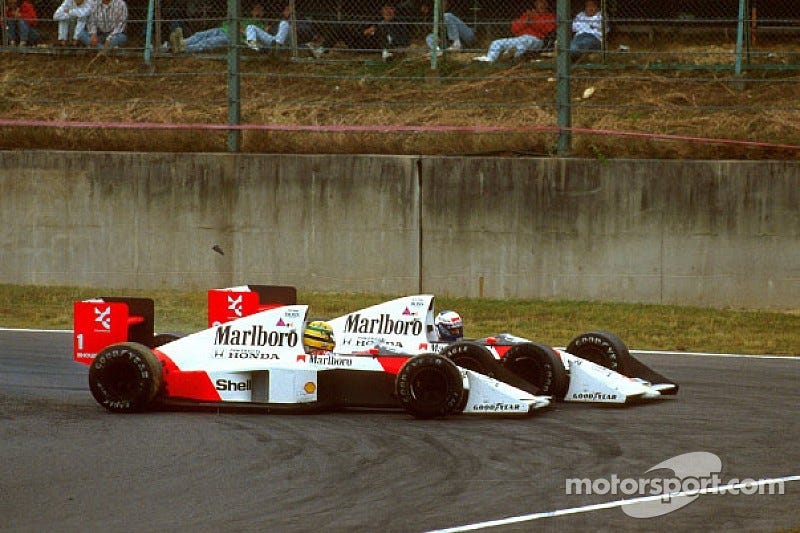
#2: Japanese Grand Prix 1989 - Ayrton Senna & Alain Prost (McLaren)
There is no rivalry more iconic, more volatile, than Ayrton Senna vs Alain Prost. In a battle of opposites that defined an era of the sport, Senna was the mercurial genius from Brazil, who drove with a fiery intensity. Prost was the calculating Frenchmen, who earned the nickname ‘Le Professeur’ for his methodical, cerebral approach. Together they turned the late 1980’s McLaren garage into a war and F1 into a global soap opera. Honestly, its a wonder they haven’t made a feature film about these two. Anyways, the feud reached a boiling point at the 1989 Japanese Grand Prix at Suzuka, the penultimate race of the season. With the championship on the line, tensions were high and what followed was one of the sports most controversial moments. On Lap 47, Senna dove down the inside at the final chicane in a desperate move to pass Prost. The Frenchmen closed the door and the two collided, both men coming to a halt. Senna, ever relentless, convinced the marshals to push-start his car. He rejoined, went on to win the race, thinking he had kept his title hopes alive. But the FIA had other plans.
Hours later, Senna would be disqualified for cutting the corner and rejoining the track unsafely. The decision handed Prost the 1989 World Championship, the 3rd of his career, and the fallout was ugly to say the least. Senna was fined 100,000 euros, suspended for six months, and publicly condemned by FIA president Jean-Marie Balestre, himself a Frenchman, which only fanned the flames. Debate still rages on about who was at fault. Prost’s defenders call the move by Senna reckless, but Senna’s supporters argue he was ahead at the apex, and the corner was his to take. I think I fall on the same side as most drivers and pundits, that Senna’s move was just, and the disqualification was perhaps excessive retribution. The clash at Suzuka should’ve been all there is to tell, but it only lit the match for an even more explosive showdown in 1990. But that’s for another day.
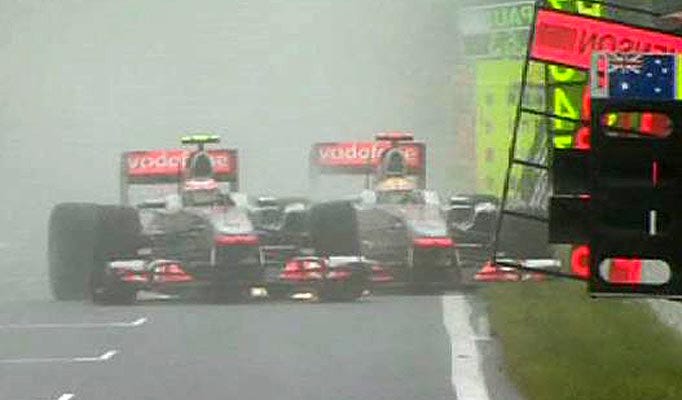
#1: Canadian Grand Prix 2011 - Jenson Button & Lewis Hamilton (McLaren)
In the spirit of why this article exists, it’s only fitting that the top spot goes to a clash between two McLaren teammates in Canada, who have paved the way that Oscar Piastri and Lando Norris now walk, that being Jenson Button and Lewis Hamilton. And just like Piastri/Norris, their collision was not born from malice, but from two competitive drivers unwilling to yield. On Lap 7 of the 2011 Canadian Grand Prix, Lewis Hamilton attempted an audacious move around the outside of Button down the pit straight as they battled for fifth. Button didn’t properly see him, nd squeezed his teammate hard into the wall. Hamilton was out on the spot, car crumpled against the barrier. Button, meanwhile, pressed on. What followed was one of the most unbelievable races in history. A torrential downpour suspended the race for over two hours, and when the action resumed Button’s day only got worse. On Lap 37, he tangled with Fernando Alonso’s Ferrari in a move that felt Alonso beached in the gravel, and Button limping to the pits with a puncture. Last place and seemingly out of contention.
But Button wasn’t done. In a masterclass of wet-weather driving, Button carved his way through the field, often lapping two seconds quicker than anyone else. The race itself stretched to a record-breaking 4 hours, 4 minutes, and 37 second, and Jenson Button completed one of the sport’s greatest comebacks, rom last to first, taking victory on the very final lap after pressuring Sebastian Vettel into a rare mistake. As for Hamilton, the writing was on the wall. His time at McLaren was plagued with reliability issues and missed opportunities. 2012 would be Hamilton’s final year at McLaren, turning down a contract extension to make a seismic move to Mercedes in 2013. 6 World Championships later, and the rest is history as they say.
HISTORY REPEATS ITSELF
Senna vs Prost, Webber vs Vettel, Hamilton vs. Rosberg to Perez vs. Ocon, the history of Formula 1 is riddled with examples of teammates turning into rivals. Each of these clashes left its mark, on teams, on championships, on the legacies of the drivers involved. And now, as we look at the collision between Oscar Piastri and Lando Norris at the 2025 Canadian Grand Prix, could we be witnessing the start of the next great intra-team storyline? McLaren now face a dilemma older than the sport itself, let them race and risk it all, or manage the situation before it spirals. It’s a tightrope act. Handle it well and you can find team-wide success, handle it poorly and history shows the consequences can be defining. The truth is, in F1, collisions between teammates are rarely just about the incident itself. They’re about the identity, legacy, power dynamics, pride. They force teams to pick a side, fans to draw battle lines, drivers to reveal what mettle they’re made of.
It’s the latest chapter in a saga as old as Formula One itself, where the only rule that truly matters is this: Don’t crash into your teammate.
And yet…they always do.
